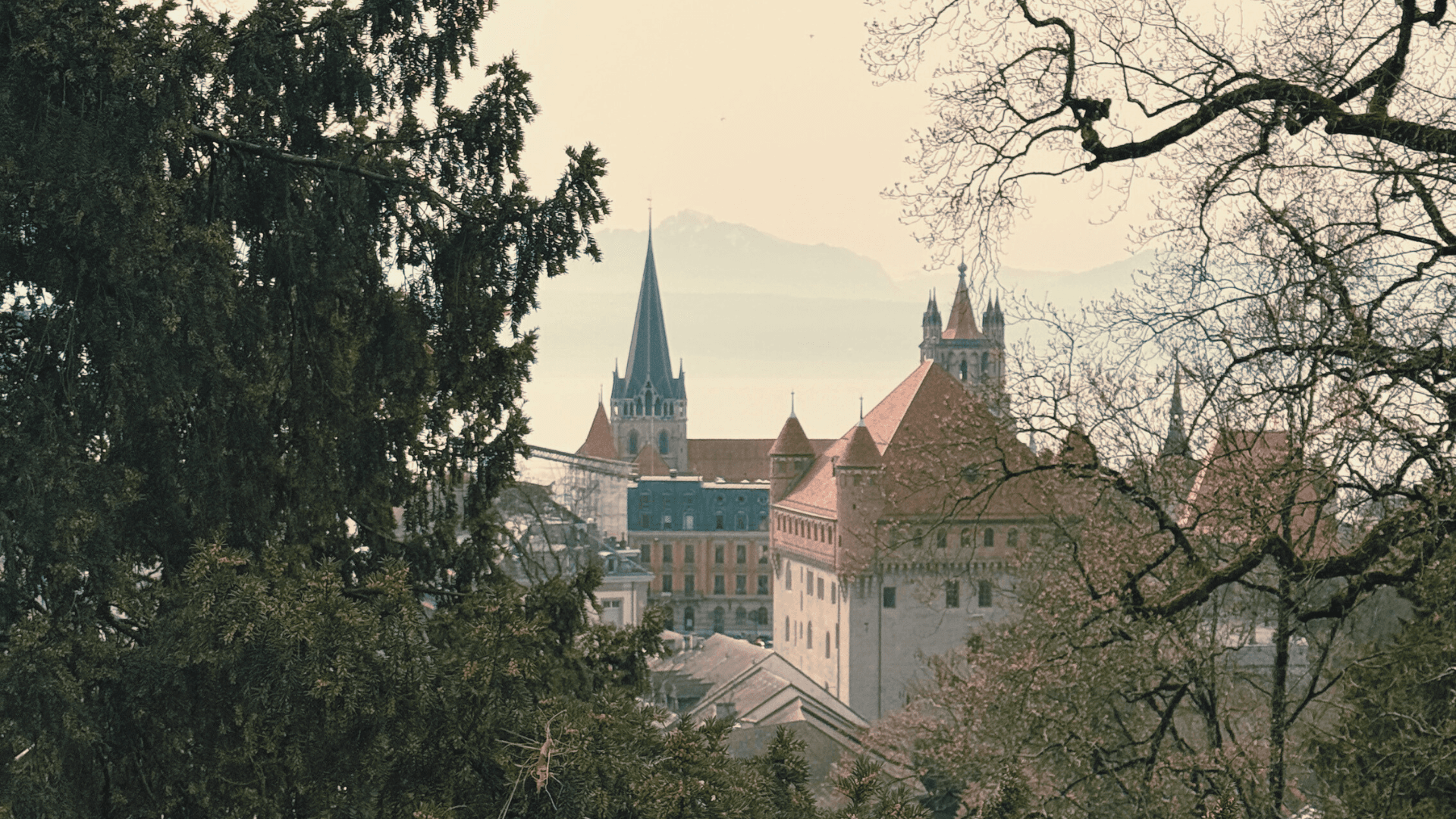
Lausanne is not known for rolling out the red carpet. It’s not a city of waterside ritz, like Cannes or Monaco, where the famous flock to be seen. There are no resorts. Less flamboyance and more discretion to flash the cash. At most, the ridiculous cars and fancy boutiques only make it as far as Geneva.
Yet it’s precisely this discretion that drew three leading ladies to make Lausanne their home. Coco Chanel, Audrey Hepburn and Capucine were drawn to the peace of our surrounding mountains and their indifference. Useful, if you’re looking to duck from the flashing lights of Hollywood or, running away from your own past.
These extraordinary and non-conformist women moved to our city and stayed for decades. Theirs are stories of espionage, affairs, refuge, female friendship and tragedy. All of them glamourous. Each carrying the label of an icon.
Coco Chanel
Pioneer of the trouser and the little black dress, Gabrielle “Coco” Chanel (1883-1971) designed clothes for women that prioritised movement over restriction. She banished the corset and revolutionised fashion, remaining famous for her style, her perfume and formidable business acumen. At her peak, she managed five boutiques in Paris and 4’000 employees, working determinedly to build the haute couture empire that still dominates today.
But there’s a pivotal chapter of her life that’s left off the Chanel website. In 1939, she was forced to close her shops because of the war and became affiliated with the German military during their occupation of Paris. She lived in the Ritz hotel, which doubled as Nazi headquarters, and began a love affair with a senior Nazi General. Together they went on intelligence missions abroad under the guise of business travel, even earning her the codename “Westminster”.
This code was an unsubtle nod to her connections with British high society, including an overlapping, decade-long romance with the then Duke of Westminster. It is likely that their influence had a hand in her release. In 1944, French forces took her into questioning but there were never any repercussions for her wartime double life. She had the sense to flee anyway, booking a one-way train ticket to Switzerland where she knew she could keep a low profile.
She chose Lausanne and settled here, alternating her residence between Le Beau Rivage Hotel and the Lausanne Palace, where rumour has it she would only ever drink champagne. Her lakeside life granted her the blind eye and stability that she wanted and she stayed for ten years, also buying a villa in Sauvabelin. Though she made a quiet return to Paris, it was Lausanne where she wanted to be buried. You can visit her gravestone, which of course she designed herself, in the Bois-de-Vaux Cemetery. There’s also a suite named after her in The Lausanne Palace.
Audrey Hepburn
As one of the most iconic and decorated actresses of all time, Audrey Hepburn (1923-1993) hardly needs an introduction. Oscar winning, Golden Globe winning, BAFTA winning and Emmy winning, her Hollywood career was stratospheric, and she remains much-loved for her leading roles in Breakfast at Tiffany’s and My Fair Lady.
She was a world citizen, growing up in Belgium, the UK and the German occupied Netherlands before her rise to fame and move to the US for the big screen. It was in Lausanne, however, where she established herself. She bought a villa in Tolochenaz with her former co-star and husband Mel Ferrer, and they emigrated in 1966, when she went into semi-retirement. She was looking for peace, wanting to raise their son far from the paparazzi and the flashing lights of Hollywood.
There were rumours of affairs on both sides, and her and Mel divorced two years later. But her choice to live in Switzerland endured. She stayed in her Tolochenaz villa for the next 30 years, naming it “La Paisable”. She loved modest, simple pleasures, growing her vegetable patch and going to the weekend market in nearby Morges. In a biography, her son wrote that Audrey valued the security that Switzerland offered, granting her a normal life out of the public eye.
She re-married and had a second son with an Italian psychiatrist in 1970, waiting a further six years before a return to acting. Though she worked on several films, a new purpose was found in the final five years of her life, when she became a special goodwill ambassador for UNICEF. She devoted herself to this tirelessly, going on over 50 missions round the globe, from Sudan to Vietnam to El Salvador.
Audrey Hepburn is buried in the local cemetary of Tolochenaz, less than one mile from her former home. There is also a small bronze bust in the town square which carries her name. “La Paisable” is currently for sale on the housing market, listed at 15 million CHF.
Capucine
Germaine Hélène Irène Lefebvre (1928-1990) was a French actress and model who was famous under her self-adopted mononym, Capucine. Her striking beauty meant that she was spotted twice. First in Paris at 17, to work for Givenchy and Christian Dior. Second on a catwalk in New York, where a film producer arranged to fly her out to Hollywood. He funded her English and acting classes which turned out a success, and she signed a contract with Columbia Pictures the following year.
She appeared in 36 films and 17 television productions, starring alongside John Wayne and Jane Fonda. In 1961, she was nominated for a Golden Globe for Song Without End, though today, you are most likely to recognize her for playing Inspector Clouseau’s wife in The Pink Panther, who has an affair with a jewelry thief. She also had a leading role in What’s New Pussycat, written by Woody Allen.
She returned to Europe and worked on several more productions, but the spotlight of fame had already moved on. She decided to settle in the same town as her long-standing friend Audrey Hepburn, who modelled alongside her for Givenchy in the 1950s. Unlike Audrey, her Hollywood days were quickly forgotten. She spent thirty years living in Lausanne, opposite the Parc de Milan at Chemin de Primerose 6.
Capucine was known for being unconventional. After a brief eight-month marriage in her twenties, she never wed again and in the last few years of her life, became a complete recluse. Suffering from mental illness, this former star tragically jumped from her apartment to her death in 1990.
Vanessa Tracey is a contributing writer for The Lausanne Guide. You can also read and sign up to her newsletter on Substack,