We’ve all been there. You were already late and the bus that was due ten minutes ago is yet to arrive. Those also waiting start to sigh, look up from their phones and abandon the stop entirely. It’s only after taking a closer read at the screen that you notice the small print.
Avis de perturbation.
Traffic must be ground to a halt. There’s another protest in town.
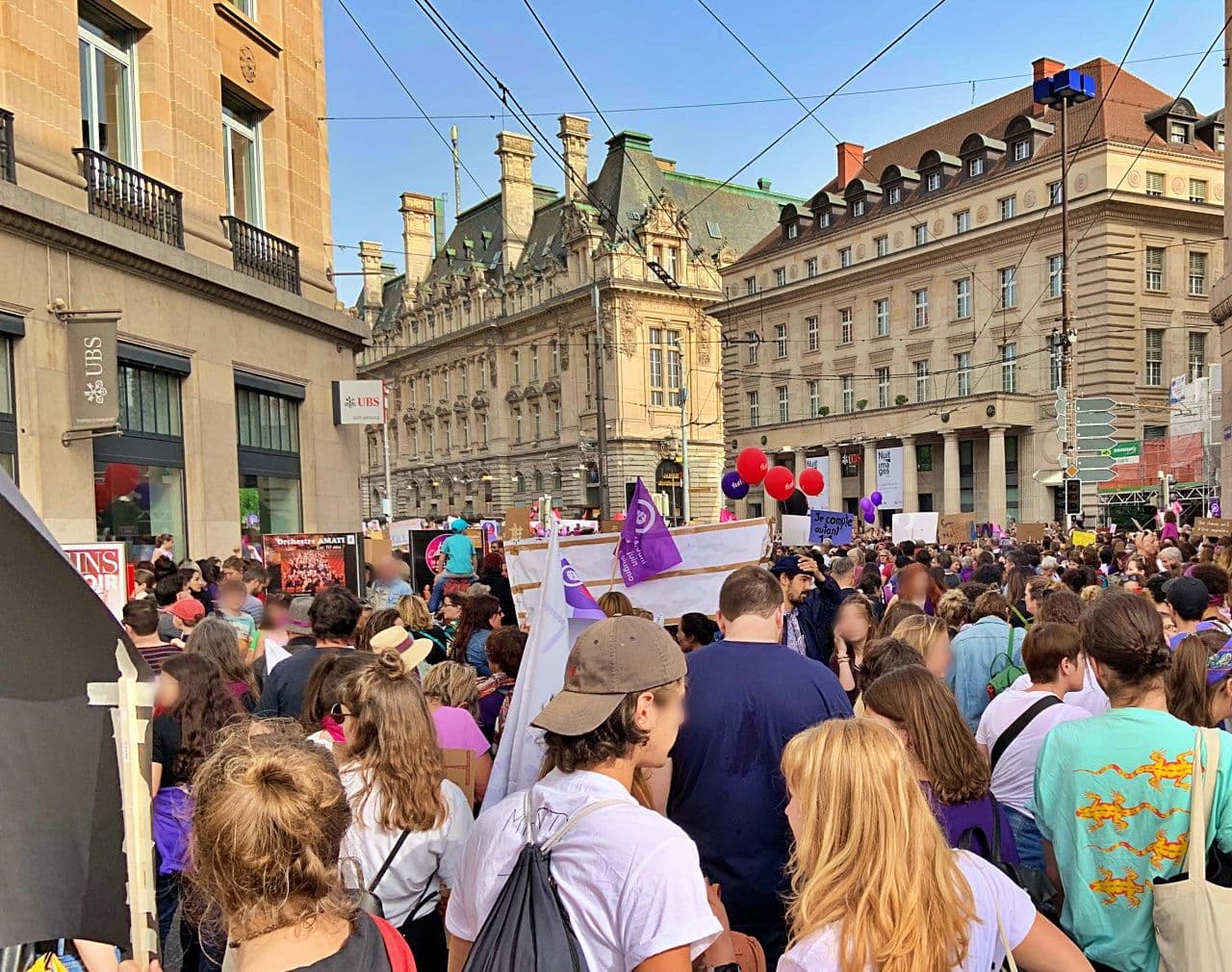
Lausanne is a city that likes to mobilise. It’s no surprise, given the significant student population and its claim to being Switzerland’s most left-wing. In March this year, up to 5’000 people attended the second edition of an anti-fascism carnival, replete with floats, dancing, techno and confetti. Protesters brought their children along and it was heralded for having a joyous atmosphere.
The same month, 3’000 people showed up for a feminist march against ‘imperialist wars’ on International Women’s Day. And between then and now, there have been multiple walks, a Labour Day festival to campaign for a cantonal minimum wage, and preparations are underway to commemorate a nation-wide feminist strike in June.

If “faire la manif” is known and quoted as something très Lausannois, the right to do so needs to be protected more than ever. Switzerland seems to be taking an increasingly hard line on organised demonstrations. Amnesty International called the country out in a 2025 report after certain cantons tightened the rules to manifest. In 2023, Basel and Zurich temporarily banned protests related to the conflict of Israel and Palestine. Zurich since passed a vote that organisers for any cause without advance authorization can be charged for police costs, of up to 30’000 CHF per attendee. It came into force this year, but is already under legal review.
Protesting is also in the spotlight for the upcoming G7 in Évian-les-Bains. Citing security reasons, there was a motion in Geneva to ban all demonstrations during the summit. Authorities are nervously looking back to road blockades, looting and window smashing violence during the G8 in 2003. Though the ban did not pass, a coalition of 60 organisers are negotiating the canton’s proposed restrictions, which remain unresolved at the time of writing. Local groups in Vaud have confirmed they will join the action in Genève.

Currents of activism have run through Lausanne’s streets for decades. The most historic was a youth movement called Lôzane bouge in the early 80s, which caused disruption for over a month. Closely linked to riots in Zurich, young people were demanding the creation of a cultural space independent from local authorities, the right to post flyers without prior approval, the right to demonstrate freely and the abolition of police records on homosexual men. Clashes with the police reached their peak during an attempted occupation of the EPFL. Several negotiations later and the movement was eventually awarded a youth premises by the city on Rue Saint-Martin.
Forget your bus. It’s being held up by people who want to send a louder message. Lausanne is not afraid to take it to the streets. To get things done, you’ll have to head out on foot too.
Where you can get involved with activism in Lausanne and wider Romandie
- Coalition Romande Antiraciste
- Action Palestine
Vanessa Tracey is also on Substack. You can read more of her writing here.
Sources: RTS, SRF, 24heures, Blick, Tribune de Genève
More on Lôzane Bouge here.