Have you started smelling garlic on your walks or runs around town? Wondering if it’s the person who just walked past you… or if someone had a very heavy garlic lunch?

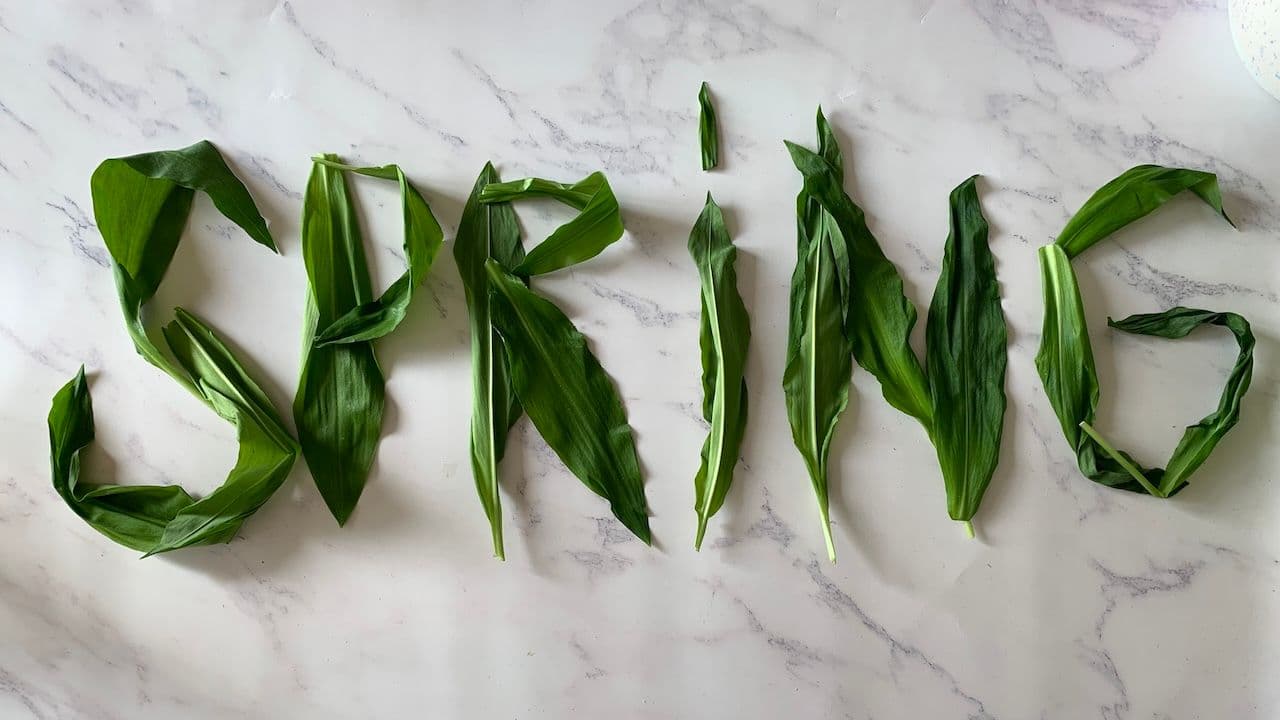
Well, the truth is, no one smells. It’s wild garlic. Or as it’s known here, ail des ours, and it’s growing everywhere around us.
So, what does this wildly fragrant herb actually taste like? Think mild, peppery garlic. A little like chives crossed with watercress. All parts of the plant are edible, but the leaves are the real star in the kitchen—perfect as a substitute for spinach, chives, or classic garlic in a variety of dishes.

1. Here are a few basics to know about this very stinky plant:
- The “Bear” Connection: The name comes from the belief that brown bears, emerging from hibernation, eat the bulbs to cleanse their systems and regain strength.
- Has Many Names: Also known as ramsons, buckrams, wood garlic, broad-leaved garlic—and even “stinkers” or “gypsy’s onion.”
- Garlic Alternative: It offers a fresher, milder, slightly peppery flavour. Perfect in pesto, salads, and soups.
- Dangerous Lookalike: Be careful—wild garlic closely resembles the poisonous lily of the valley.
Key tip: If it doesn’t smell strongly of garlic when crushed, it’s not wild garlic. - Disappears Quickly: The season is short—typically March to May—before it flowers and vanishes until next spring.

2. Where to find it, what to take, and what to look out for:
Tools: Bring a large ziplock or airtight pouch—the smell is strong and will linger in your bag (and car). No scissors needed; you can simply pluck the leaves by hand.
How to safely identify wild garlic:
- The smell test: Only pick leaves that release a strong garlic scent when crushed.
- Leaf structure: Each leaf grows on its own individual stem. Toxic lookalikes often grow in clusters.
- Surface: Wild garlic leaves are matte underneath, not glossy like lily of the valley.
- Foraging rule: Pick leaves one by one to avoid mixing in anything unwanted.

3. Where to forage around Lausanne:
- Cascade du Dard - along the river Nozon (Croy)
- Fox Trail - along the Vuachère (Lausanne)
- Sentier de la Truite (Morges)
- Sentier des Toblerones (Nyon)
Tip: try not to pick the ones closest to the path… you know, dogs and all.

4. How to cook it and enjoy its garlicky goodness
Step 1 (non-negotiable): Wash thoroughly.
From there, the options are endless:
- Pesto: A perfect way to preserve your harvest and enjoy it long after the season ends.
- Quiche: Swap spinach for wild garlic for a fresh twist.
- Salads & sandwiches: Add it for a punchy, garlicky kick.
- Spätzli: A Swiss staple that works beautifully with wild garlic.
We’ll leave you with one last (untested, but intriguing) idea:
Garlic-flavoured milk… naturally.
Rumour has it that when dairy cows eat large amounts of wild garlic, it can give their milk—and butter—a distinct garlicky taste.
Would you try it?
TLG Note: Lausanne’s soils carry traces of its industrial past. Certain areas—particularly around the city centre, Sauvabelin, and the northern slopes—have been identified as containing dioxins. While occasional foraging is not considered a major health risk, authorities recommend limiting consumption from highly affected zones and always washing foraged plants thoroughly. When in doubt, consult the official cantonal maps before heading out.